In the Field
The story of hunting with American Foxhounds reaches back well before this country was fully formed. Early settlers from England, France, and Ireland brought their hounds with them, each adding something of their own. Over time, those lines came together and shaped what we now know as the American Foxhound.
One of the most important names tied to that history is George Washington. He had a real passion for hounds and put time into improving them. By crossing English stock with French hounds gifted to him by the Marquis de Lafayette, he helped develop a dog better suited for American terrain. The result was a hound with more speed, more endurance, and the ability to carry a race across long stretches of country.
Compared to their English counterparts, American Foxhounds were bred to go farther and last longer. They needed grit, speed, and enough independence to work through big woods, rough ground, and long races without quitting.
What has always set this tradition apart is how deeply it’s rooted in family. Many hunters are raised up in it from the start. Some find their passion for the sport later in life. No matter how you got into it or how long you’ve been in it, hound hunters have a strong connection tying to a love for this tradition and a passion for keeping these hounds in the woods.
Children grow up around hounds, riding along, sitting on tailgates, and listening to stories about great races and memorable dogs. That’s how the knowledge gets passed down. It comes from experience, from time spent in the woods, and from being around people who have done it their whole lives.
Many kennels become family legacies, with bloodlines carefully maintained and names that carry weight over generations. A truly great hound is remembered not only for what it accomplished, but for where it came from and the people behind it.
Keeping the legacy alive comes down to the people who continue to care about it. Hunting with hounds isn’t just part of history. It’s still very much alive today.
Every story shared, every pedigree preserved, and every person brought into the sport helps carry it forward. Early mornings, the sound of a pack opening up, and the pride that comes with a well-bred hound all connect today’s hunters to those who came before them.
In the end, foxhunting in America is more than a tradition. It’s a way of life built on generations of dedication, respect for the hound, and a deep connection to the land and the people who share it.
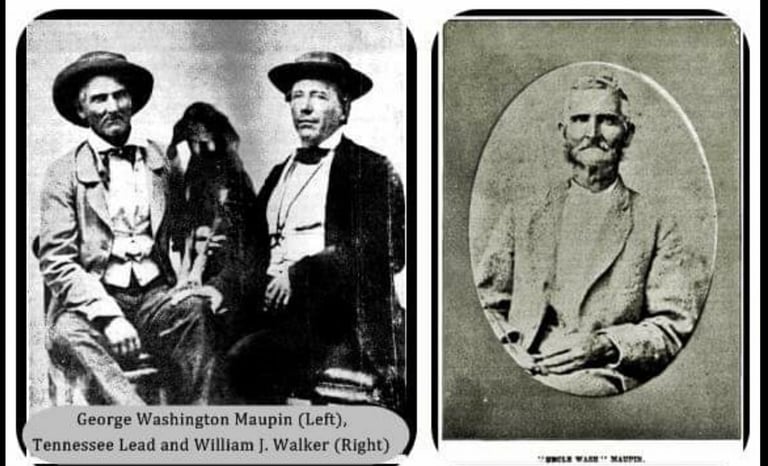
In 1855 the first recorded red fox was spotted in Madison County; Garrard saw its first a year later. A black and tan hound of medium build belonging to George Washington “Wash” Maupin was the only creature that knew how to pursue this new arrival successfully, revealing that he must have had prior experience. That hound was the famous “Tennessee Lead,” so named because he had been stolen in 1852 from a deer hunt in Tennessee by a livestock trader, who in turn sold it to Maupin. Lead’s successes against the red fox created a high demand for his service as a stud. The ‘Walker’ is today the most popular of the American Foxhound dog breed.
National Foxhunters Association, September 2021
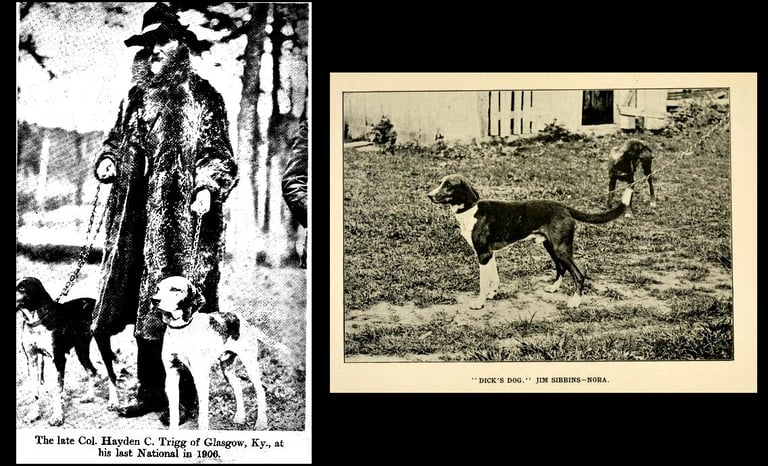
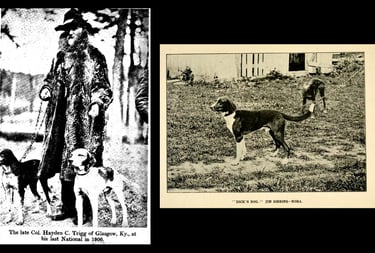
Colonel Haiden C. Trigg wanted to develop a faster hound than those available in his area. He used dogs from the Birdsong, Maupin, and Walker lines to develop his strain. "Dick's Dog", a Trigg Hound whelped in 1887
National Foxhunters Association, April 2020
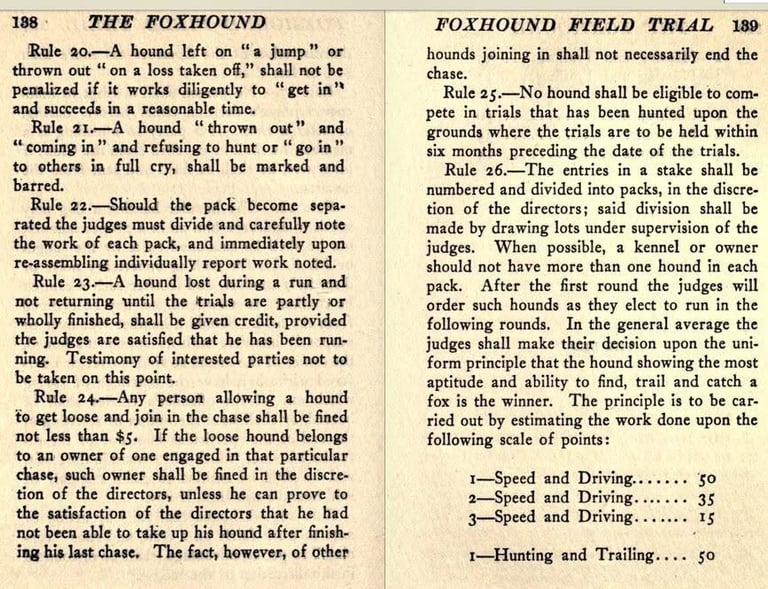
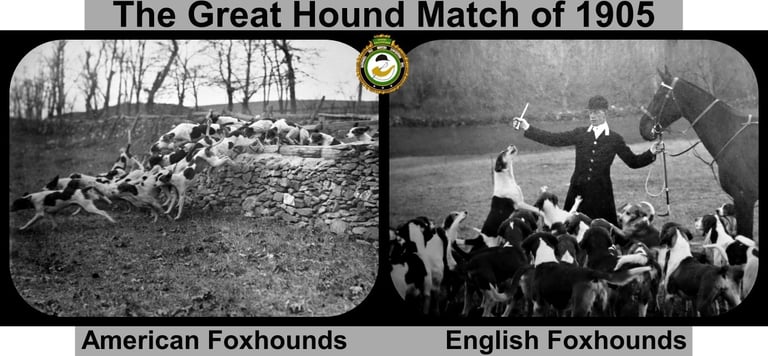
The Great Hound Match of 1905:
There was to be a contest, a great Hound match, between two packs of foxhounds, one English and one American. The English hounds carried, on their great stout forearms and deep chests, the monumental weight of centuries of foxhunting in England and were expected to make their hound dog ancestors proud of their New World conquest. The American hounds were expected to show those stodgy old Brits how it was done over here—with spunk and intuition, individuality, drive, and nerve. The foxhunting match was between A. Henry Higginson's Middlesex English Hounds & Harry Worcester Smith's American Grafton hounds. The match settled the dispute between the gentlemen concerning the superiority of their respective English & American packs of hounds. When the great showdown finally occurred, the dogs performed as they were bred. The English hounds stayed in tight formation and responded obediently to commands. The American Hounds went where instinct and impulse drove them to go. Smith's American hounds decisively won the match
National Foxhunters Association, April 2020
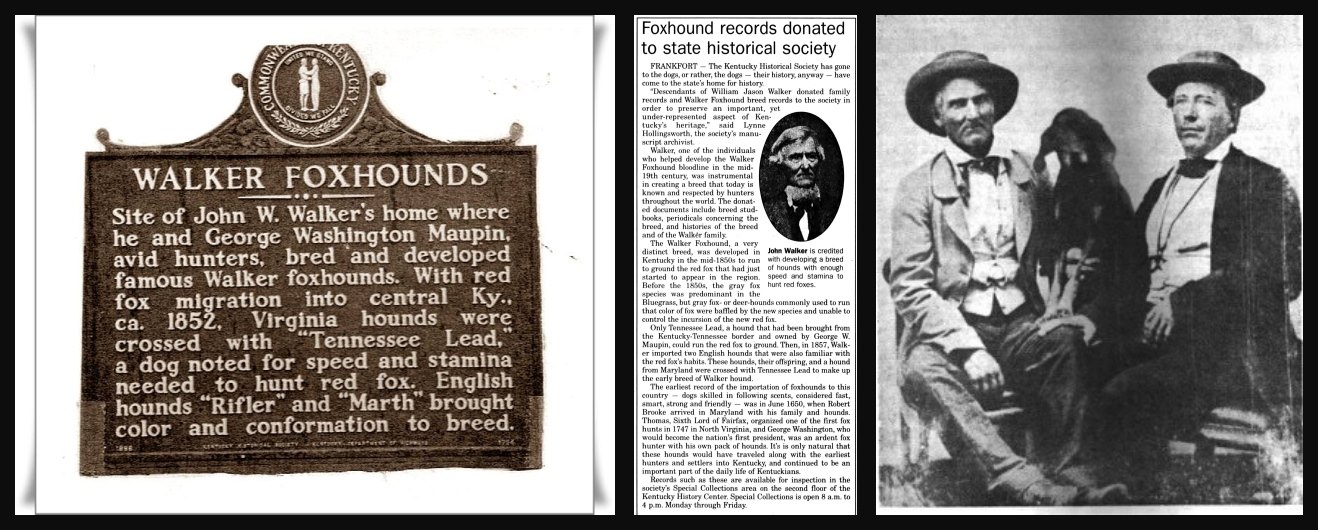
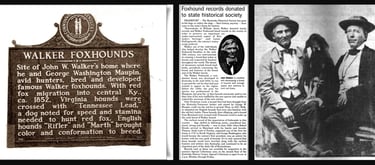
Article - The Advocate-Messenger » 2002 » November » 03 Nov 2002, Sun